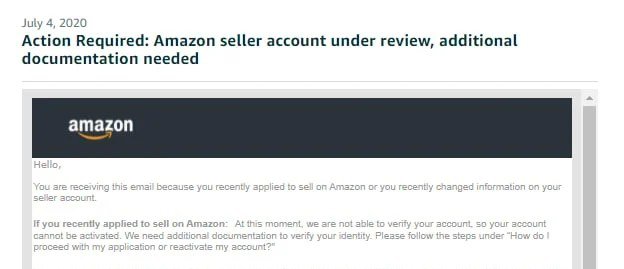
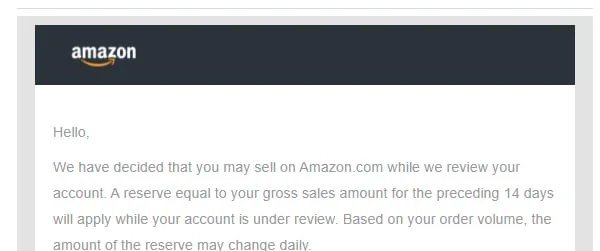
Category: All Marketplaces

Amazon seller guides that apply on every Amazon store: appeals, Account Health, listings, feedback and how Seller Central works. Where a rule differs by country, the guide says so.

  • Amazon “Used Sold as New” Complaints: How to Fix and Appeal

    “Used sold as new” and other product condition complaints are among the most common reasons listings and accounts get flagged. Many sellers never sold a used item on purpose, yet the complaints keep coming. This guide explains why, how to find the real cause, and how to appeal.

    By SellerReinstatement Appeals TeamUpdated October 20268 min read

    Quick answer

    An Amazon used sold as new complaint means a buyer reported that an item listed as New arrived looking used, opened or damaged. Amazon counts these against your Account Health whether or not you meant to sell used goods. To fix it, find where in your process items become “used looking” (returns, packaging, storage or supplier), correct it, and explain those changes in a specific Plan of Action.
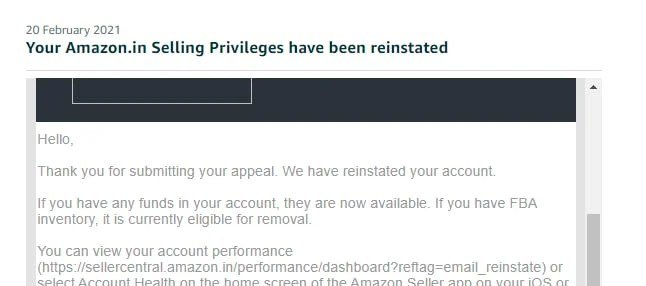
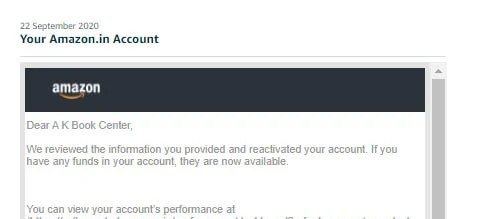
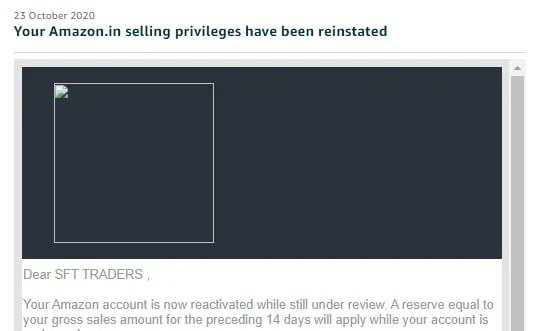
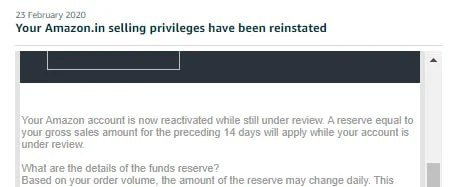
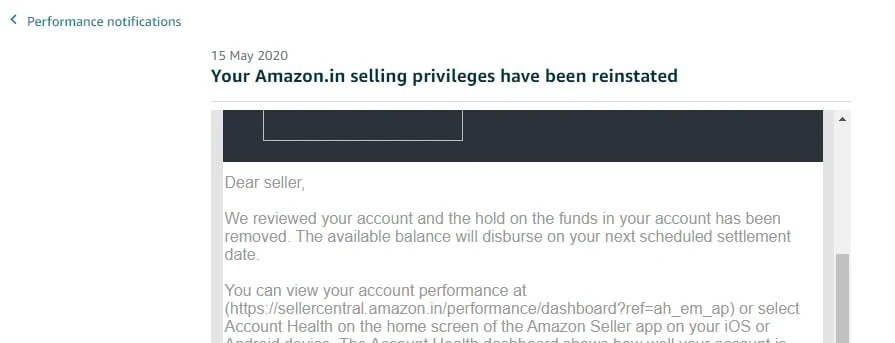
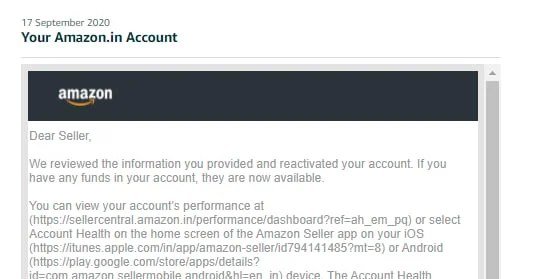
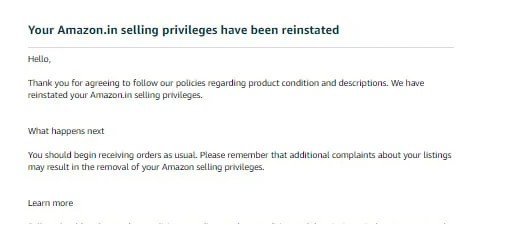
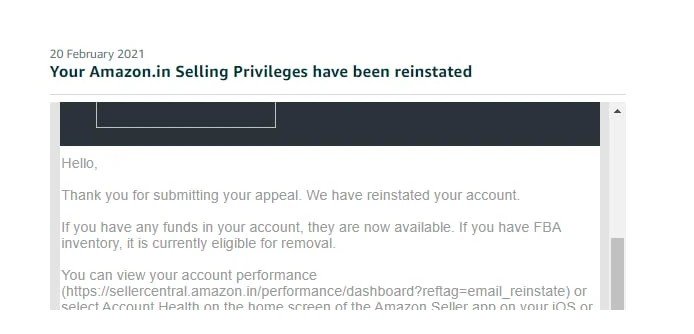
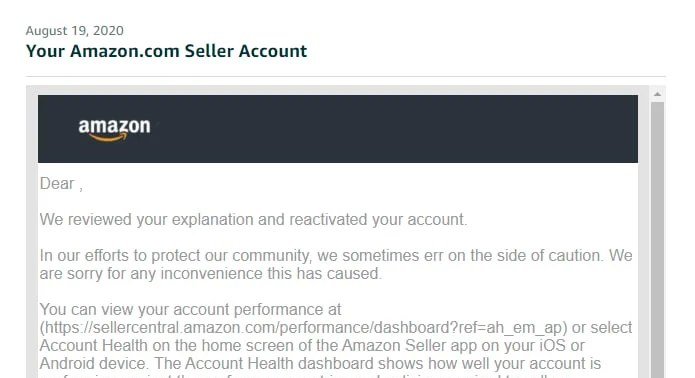
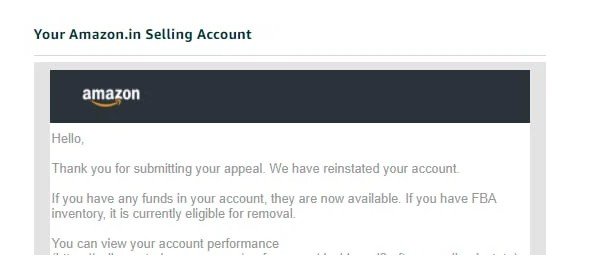
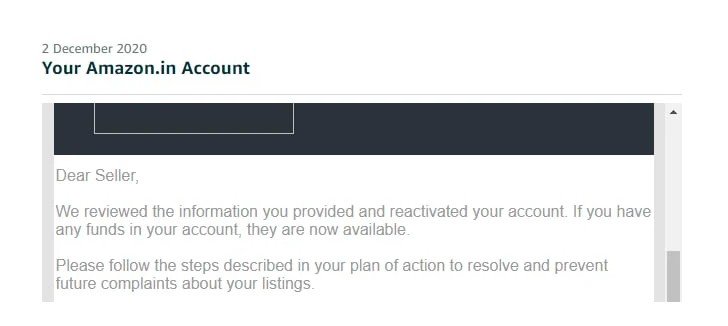
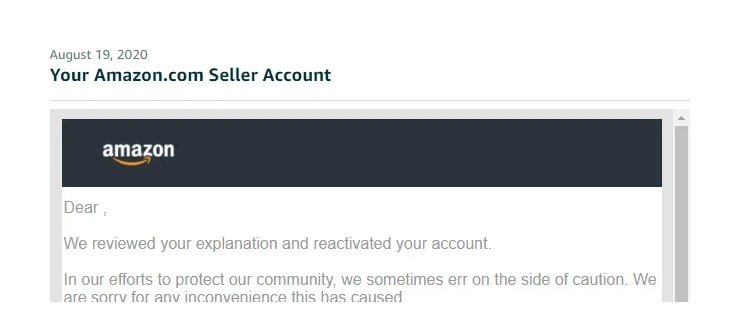
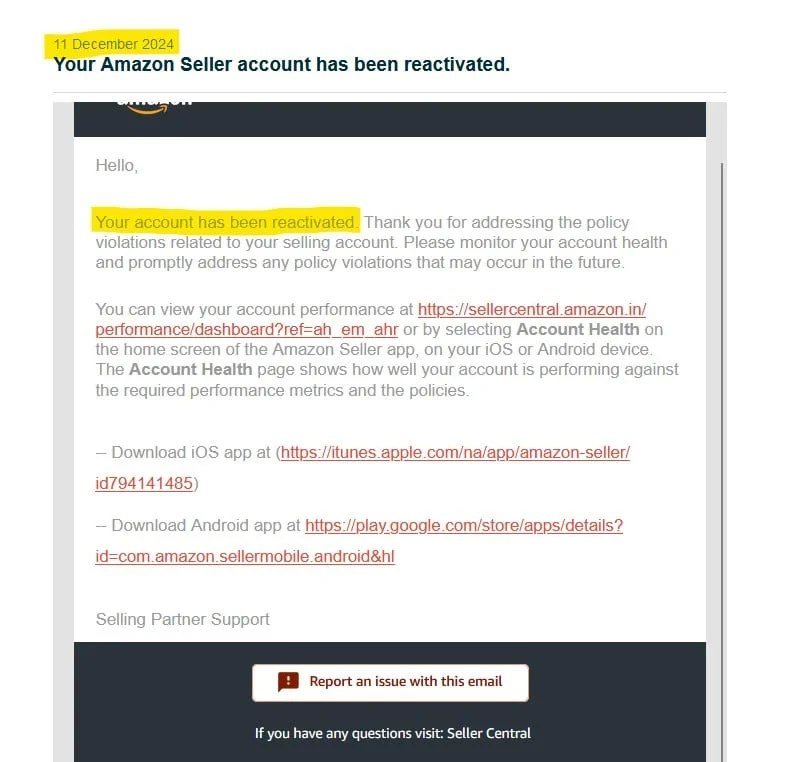
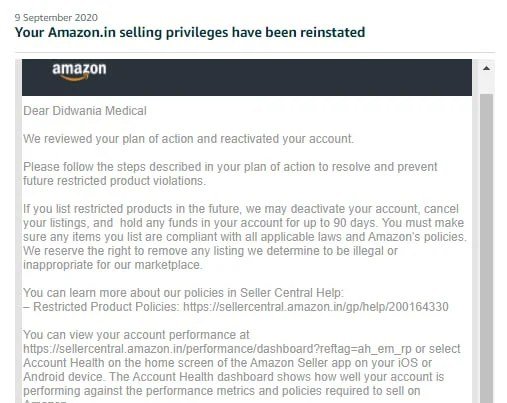
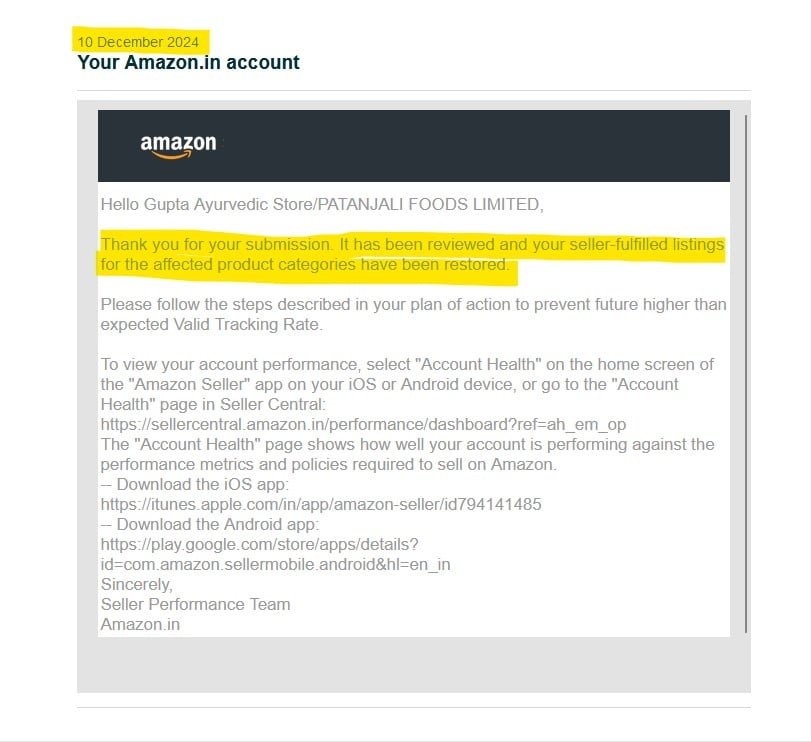
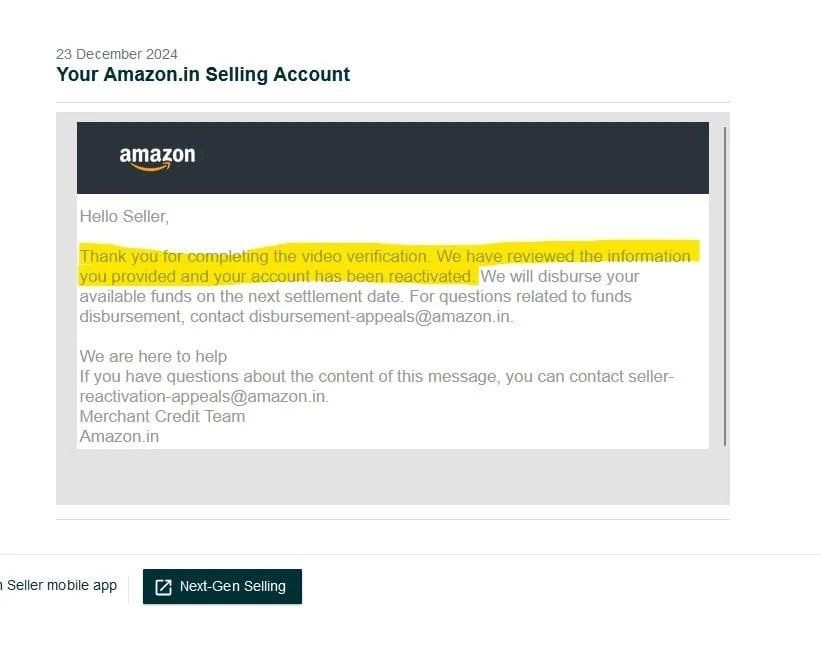
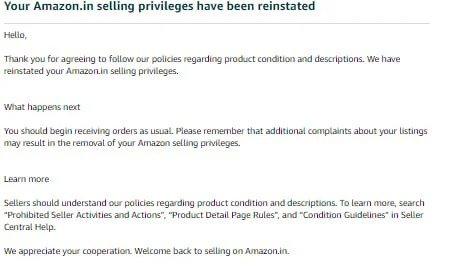
    Real Amazon reinstatement email from one of our client cases, shared with the client's permission
    Real result Amazon email from one of our client cases, shared with permission. Tap to view full size.

    Key takeaways

    • Buyers trigger these complaints, and Amazon treats them seriously even if the item was technically new.
    • Common causes: returned items resold as new, weak packaging, damaged supplier stock and FBA handling.
    • Check the buyer comments and order IDs for a pattern before you write anything.
    • Your appeal must show inspection, grading and packaging changes, not just promises.
    • Several complaints on one ASIN can lead to listing removal or account deactivation.

    Need help with this suspension?

    Send us your notice for a free case review. You get an honest answer before you pay.

    Why “used sold as new” complaints happen

    • Customer returns resold as new: a returned item goes back into sellable stock without inspection.
    • Packaging: scuffed boxes, broken seals or missing shrink wrap make new items look used.
    • Supplier stock: shelf-worn or previously opened units from a wholesaler or liquidation source.
    • FBA handling: items damaged in a fulfillment center or returned customer units marked sellable.
    • Listing mismatch: the photos or description do not match what buyers receive, so a new item “looks different”.

    How to find the real root cause

    1. Pull every complaint

    Use the Account Health page and the Voice of the Customer dashboard to list each complaint, the ASIN, the order ID and the buyer comment.

    2. Look for the pattern

    Are the complaints on one ASIN, one supplier batch, FBA or merchant-fulfilled orders, or orders shipped after a return? The pattern usually points to the cause.

    3. Check returns and removals

    Look at whether customer returns were marked sellable and sent out again.

    4. Inspect current stock

    Check a sample of the inventory you still have. If it looks worn, so will the next shipment.

    Want a second opinion on the pattern? Tap the green WhatsApp icon on your screen and send us your complaint list. Reading it is free.

    Corrective actions Amazon expects

    Do thisAvoid this
    Remove or inspect affected inventory, including FBA stock.Leaving the same batch on sale.
    Refund or replace affected buyers.Arguing with buyers about the condition.
    Stop reselling returns as new; grade them or sell them as used.Putting returns straight back into sellable stock.
    Upgrade packaging and add a pre-shipment check.Promising to “be more careful” without changing anything.
    Fix listing images and text that do not match the product.Ignoring repeat comments about the same issue.

    Appeal example: weak vs strong

    Weak appeal

    All our items are brand new. The buyers are wrong. We have never sold used products and we request that you reinstate our listing.

    It blames buyers and shows no investigation or change.

    Strong appeal

    Root cause: we found that three of the five complaints were on units returned by customers and restocked without inspection. Corrective actions: we removed all returned units from sellable stock, refunded the affected buyers, and inspected our remaining 340 units. Preventive measures: every return is now inspected and graded before restocking, and only sealed, undamaged units are sold as New.

    It explains the pattern, shows real changes and is easy to verify. The details here are illustrative.

    For the full structure, see our Amazon Plan of Action template.

    How to prevent future condition complaints

    • Inspect and grade every customer return before it goes back into stock.
    • Buy only from suppliers who provide sealed, new stock with invoices.
    • Use stronger outer packaging for fragile or high-value items.
    • Check Voice of the Customer weekly and act on the first complaint, not the fifth.
    • Keep photos of items and packaging before shipping for high-risk ASINs.

    Real reinstatement results

    These are reinstatement emails from client cases we handled, including cases that had been rejected before they reached us.
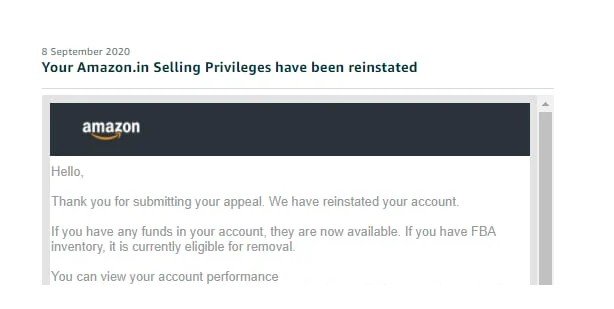
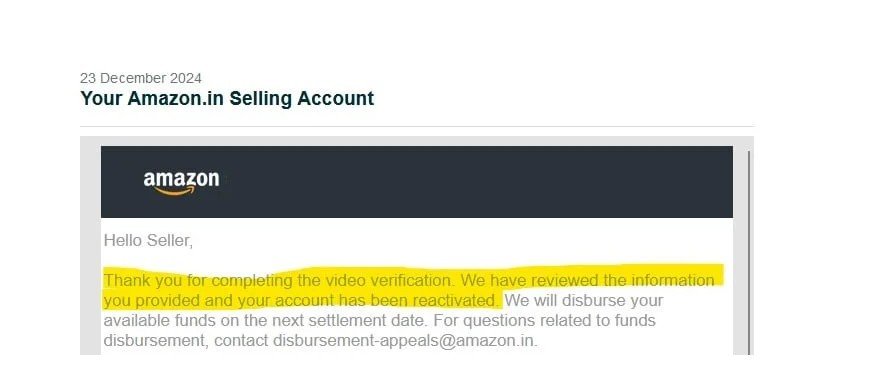
    Amazon email confirming a client's seller account was reinstated
    Real Amazon email from a client case
    Amazon email confirming a client's seller account was reinstated
    Real Amazon email from a client case
    Amazon email confirming a client's seller account was reinstated
    Real Amazon email from a client case

    How our fee works

    A rejected appeal often needs a fresh look rather than another rewrite. You pay a small part to start, and the rest only when you are selling again.

    $150To start: our full investigation ($200 for complex cases). Non-refundable.
    $350Only after your account is reinstated ($400 for complex cases).

    Tap the WhatsApp icon on your screen to start. The first review of your rejection is free.

    Frequently asked questions

    Can one used sold as new complaint get my account deactivated?

    Usually a single complaint affects Account Health but does not deactivate the account on its own. A pattern of complaints, especially on the same ASINs, can lead to listing removal or account deactivation.

    Can I get a condition complaint removed?

    Buyer complaints are rarely removed. The practical goal is to fix the cause and show Amazon what has changed, so new complaints stop and the account recovers.

    Do FBA orders count against me?

    Yes, condition complaints on FBA orders can still affect your Account Health. If the damage happened in a fulfillment center, gather evidence and raise it with Seller Support, but still review your own returns and packaging.

    Should I relist returned items as new?

    Only if they are genuinely unused, sealed and in original packaging. Otherwise sell them as used in the correct condition or remove them.

    Can you help with condition complaints?

    Yes. We review your complaints for free, find the pattern, and write a Plan of Action specific to your account if an appeal is needed.

    Need help with this suspension?

    Send us your notice for a free case review. You get an honest answer before you pay.

    SellerReinstatement Appeals Team

    The SellerReinstatement appeals team has handled Amazon seller account reinstatement cases since 2014 across every Amazon marketplace. Every guide comes from real cases.

  • How to Get an Amazon IP Complaint Retracted

    An intellectual property complaint can remove a listing in minutes and, if several build up, put the whole account at risk. The fastest fix is often a retraction from the rights owner. This guide explains when an Amazon IP complaint retraction is realistic, how to ask for one, and what to do if the owner says no.

    By SellerReinstatement Appeals TeamUpdated October 20268 min read

    Quick answer

    An Amazon IP complaint retraction is a message from the rights owner telling Amazon to withdraw the complaint. Only the person or company that filed it can retract it, and it should come from the same email address they used, with the complaint ID and ASINs. If the complaint was a mistake or you can prove your right to sell, contact the rights owner politely and professionally. Never threaten, pay for, or fake a retraction.

    Real Amazon reinstatement email from one of our client cases, shared with the client's permission
    Real result Amazon email from one of our client cases, shared with permission. Tap to view full size.

    Key takeaways

    • Only the rights owner who filed the complaint can retract it.
    • The retraction should come from the email address used to file the complaint and reference the complaint ID and ASINs.
    • Retractions are realistic when the complaint was a mistake or you can prove your right to sell.
    • Threatening or pressuring the rights owner can make things worse.
    • If a retraction is not possible, you may need to remove the listing or appeal with evidence.

    Need help with this suspension?

    Send us your notice for a free case review. You get an honest answer before you pay.

    Types of Amazon IP complaints

    • Trademark: the rights owner says your listing or product uses their brand name or logo without permission.
    • Copyright: images, text or designs are claimed as copied.
    • Patent: the product itself is claimed to infringe a design or utility patent.
    • Counterfeit: the rights owner says the item is fake. This is the most serious and often leads to an inauthentic investigation. See our inauthentic suspension guide.

    The notice in Account Health shows the complaint type, the complaint ID, the ASINs and usually the rights owner’s contact email.

    When a retraction is realistic

    Retraction is realisticRetraction is unlikely
    You bought genuine stock from the brand or an authorized distributor and have invoices.Your supply chain cannot be traced back to the brand.
    The complaint names the wrong ASIN or a product you do not sell.The listing does use the owner’s logo, images or text.
    You own the trademark or have a license for it.The rights owner is enforcing a selective distribution policy and you are not authorized.
    The owner was targeting a different seller on a shared listing.The product copies a patented design.

    How to request an Amazon IP complaint retraction

    1. Collect the details

    Note the complaint ID, the ASINs, the complaint type and the rights owner’s email from Account Health.

    2. Write a short, professional email

    Explain who you are, which complaint you are writing about, and why you believe it was filed in error. Attach invoices or license documents if you have them. Keep the tone neutral and factual.

    3. Make it easy for them to retract

    Rights owners are busy. Give them the exact information Amazon needs: complaint ID, ASINs, and a clear statement withdrawing the complaint. The retraction must be sent by the rights owner from the same email address they used to file the complaint, to the address Amazon provides for notice disputes (currently notice-dispute@amazon.com).

    4. Follow up once

    If there is no reply after a reasonable wait, follow up once. Repeated messages can look like harassment.

    5. Confirm in Account Health

    After the retraction is processed, check that the complaint has been removed and the listing restored.

    Not sure whether your complaint can be retracted? Tap the green WhatsApp icon on your screen and send us the notice. We will tell you honestly what your options are.

    Retraction request: weak vs strong

    Weak request

    You filed a false complaint against us. Withdraw it immediately or we will take legal action.

    Threats rarely work and give the rights owner a reason to escalate.

    Strong request

    Hello, we received complaint ID 1234567890 for ASIN B0XXXXXXX. We purchased this stock from your authorized distributor (invoice attached). If you agree the complaint was filed in error, could you send a retraction to Amazon from the email used to file it, quoting the complaint ID and ASIN? Thank you for your time.

    It is polite, specific, gives evidence and tells them exactly what to do. The details here are illustrative.

    If the rights owner will not retract

    You still have options, depending on the facts:

    • Remove the listing or edit content that may infringe, then confirm the change in Account Health.
    • Appeal with evidence if the complaint is clearly invalid, such as proof of authorized sourcing or your own trademark registration.
    • For counterfeit claims, prepare a Plan of Action with supplier invoices. Our Plan of Action template shows the structure.
    • For complex trademark or patent disputes, speak to an IP lawyer. We are not a law firm and do not give legal advice.

    Real reinstatement results

    These are reinstatement emails from client cases we handled, including cases that had been rejected before they reached us.
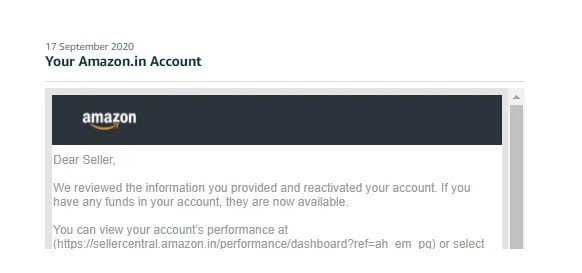
    Amazon email confirming a client's seller account was reinstated
    Real Amazon email from a client case
    Amazon email confirming a client's seller account was reinstated
    Real Amazon email from a client case
    Amazon email confirming a client's seller account was reinstated
    Real Amazon email from a client case

    How our fee works

    A rejected appeal often needs a fresh look rather than another rewrite. You pay a small part to start, and the rest only when you are selling again.

    $150To start: our full investigation ($200 for complex cases). Non-refundable.
    $350Only after your account is reinstated ($400 for complex cases).

    Tap the WhatsApp icon on your screen to start. The first review of your rejection is free.

    Frequently asked questions

    Who can retract an Amazon IP complaint?

    Only the rights owner who filed it, or their authorized agent. Amazon will not accept a retraction from the seller or a third party.

    How long does an IP retraction take to process?

    Once Amazon receives a valid retraction from the rights owner, it is often processed within days, but timing varies and Amazon does not publish a fixed timeline.

    Does a retraction remove the complaint from Account Health?

    A valid retraction should remove the complaint and its impact on Account Health. Check the dashboard afterwards to confirm.

    Is it legal to pay a rights owner to retract a complaint?

    Offering payment for a retraction can be seen as manipulation and may violate Amazon policy. We do not recommend it. Focus on evidence and genuine errors.

    Can you help with IP complaints?

    Yes. We review the complaint for free, help you contact the rights owner professionally, and prepare an appeal when a retraction is not possible.

    Need help with this suspension?

    Send us your notice for a free case review. You get an honest answer before you pay.

    SellerReinstatement Appeals Team

    The SellerReinstatement appeals team has handled Amazon seller account reinstatement cases since 2014 across every Amazon marketplace. Every guide comes from real cases.

  • Amazon Account Deactivated vs Suspended: What Is the Difference?

    Amazon now uses the word “deactivated” in most notices, while sellers and forums still say “suspended”. This guide explains what each term means, how a deactivated account differs from a permanent ban, and what to do first if your Amazon account has been deactivated.

    By SellerReinstatement Appeals TeamUpdated October 20267 min read

    Quick answer

    In practice, an Amazon account deactivated and a suspended account mean the same thing: your selling privileges have been removed until you appeal or complete verification. A permanent ban is different: Amazon has reviewed your appeals and decided not to reinstate. A deactivation can usually still be appealed, so read the notice carefully before responding.

    Real Amazon reinstatement email from one of our client cases, shared with the client's permission
    Real result Amazon email from one of our client cases, shared with permission. Tap to view full size.

    Key takeaways

    • “Deactivated” is the word Amazon uses in most notices today; “suspended” is the older term.
    • Both mean selling is stopped until Amazon accepts an appeal or verification.
    • A permanent ban usually comes after appeals have been reviewed and refused.
    • The notice tells you why the account was deactivated and how to respond.
    • Your first appeal matters most, so do not rush it.

    Need help with this suspension?

    Send us your notice for a free case review. You get an honest answer before you pay.

    Deactivated vs suspended: is there a difference?

    For most sellers, no. Amazon updated its wording over the years, and current Account Health notices usually say your account has been deactivated. Older notices, forum posts and many service providers still say suspended. Both describe the same situation: you cannot sell until Amazon reviews and accepts your appeal, verification or Plan of Action.

    What changes the outcome is not the word but the reason in the notice. A deactivation for verification is handled very differently from one for inauthentic items or a Section 3 business practices violation.

    Every Amazon account status explained

    StatusWhat it means for you
    At riskAccount Health is low. Fix the flagged issues before Amazon acts.
    Under reviewAmazon is checking the account and may ask for information. See account under review.
    Deactivated / suspendedSelling privileges removed. You can appeal or complete verification.
    Funds on holdDisbursements paused, often during verification or after deactivation.
    Permanently deactivated (banned)Amazon has reviewed and refused reinstatement. Options are limited.

    Why Amazon deactivates seller accounts

    • Verification problems: identity, address or bank details did not match. See video verification failed.
    • Inauthentic or counterfeit complaints. See inauthentic suspension.
    • Section 3 business practices, including manipulation or deceptive conduct. See Section 3 suspension.
    • Performance: order defect rate, late shipments or cancellations above Amazon’s targets.
    • Related accounts linked to another restricted account.
    • Review manipulation or incentivized reviews.

    Not sure which category your notice falls into? Tap the green WhatsApp icon on your screen and send it to us. Reading your notice is free.

    What to do first after deactivation

    1. Save the notice

    Copy the full notice, the date and any ASINs or order IDs. You will need the exact wording.

    2. Check Account Health

    Look at every flagged item, not only the one named in the email. Hidden issues can cause a second rejection.

    3. Do not appeal the same day

    A rushed appeal with a guessed root cause is the most common reason first appeals fail.

    4. Prepare evidence

    Gather invoices, verification documents and screenshots that match the reason in the notice.

    5. Write a specific Plan of Action

    Follow the three-part structure in our Amazon Plan of Action template.

    Can a permanently deactivated account come back?

    Sometimes, but it is much harder. Once Amazon says it will not reinstate the account, it usually only reconsiders when there is genuinely new information or evidence that earlier appeals missed something important. We read these cases honestly and will tell you if we do not think an appeal is worth paying for.

    Real reinstatement results

    These are reinstatement emails from client cases we handled, including cases that had been rejected before they reached us.

    Amazon email confirming a client's seller account was reinstated
    Real Amazon email from a client case
    Amazon email confirming a client's seller account was reinstated
    Real Amazon email from a client case
    Amazon email confirming a client's seller account was reinstated
    Real Amazon email from a client case

    How our fee works

    A rejected appeal often needs a fresh look rather than another rewrite. You pay a small part to start, and the rest only when you are selling again.

    $150To start: our full investigation ($200 for complex cases). Non-refundable.
    $350Only after your account is reinstated ($400 for complex cases).

    Tap the WhatsApp icon on your screen to start. The first review of your rejection is free.

    Frequently asked questions

    Is a deactivated Amazon account the same as suspended?

    Yes, in practice. Amazon mostly uses “deactivated” in current notices, while many sellers still say “suspended”. Both mean your selling privileges are paused until Amazon accepts your appeal or verification.

    Can I appeal a deactivated Amazon account?

    Usually yes. The notice explains how to respond, normally through the Account Health page in Seller Central. Read the reason carefully and prepare a specific Plan of Action before you submit.

    What happens to my inventory and money?

    FBA inventory stays in Amazon warehouses while the account is deactivated, and you can usually request removal. Funds may be held until the case is resolved. The exact rules depend on the reason for deactivation.

    How is a permanent ban different?

    A permanent deactivation usually comes after Amazon has reviewed appeals and refused to reinstate. It is still possible in some cases to request reconsideration with new evidence, but options are limited.

    Can you help with a deactivated account?

    Yes. Our appeals team reads the notice free of charge, explains what Amazon is asking for, and quotes our fee before any work starts.

    Need help with this suspension?

    Send us your notice for a free case review. You get an honest answer before you pay.

    SellerReinstatement Appeals Team

    The SellerReinstatement appeals team has handled Amazon seller account reinstatement cases since 2014 across every Amazon marketplace. Every guide comes from real cases.

  • Amazon Seller Account Under Review: What It Means and What to Do

    Seeing “under review” on your Amazon seller account is stressful, especially when listings go inactive or payments stop. This guide explains what the status means, the most common triggers, and the steps our appeals team takes before anything is submitted.

    By SellerReinstatement Appeals TeamUpdated October 20268 min read

    Quick answer

    An Amazon seller account under review means Amazon is checking the account before deciding whether you can keep selling. Listings and payouts may be paused while it happens. Do not open a new account or send repeated messages. Check Account Health and your email for a request, answer exactly what Amazon asks for, and keep your documents consistent with your account details.

    Real Amazon reinstatement email from one of our client cases, shared with the client's permission
    Real result Amazon email from one of our client cases, shared with permission. Tap to view full size.

    Key takeaways

    • “Under review” is not the same as deactivated, but it can lead to deactivation if requests are missed.
    • Common triggers: identity or address checks, a sudden sales spike, a policy complaint, or linked account signals.
    • Answer only what Amazon asks for, with documents that match your account exactly.
    • Never open a second account while the review is open.
    • If Amazon sends a notice asking for a Plan of Action, treat it as an appeal.

    Need help with this suspension?

    Send us your notice for a free case review. You get an honest answer before you pay.

    What “account under review” means on Amazon

    When your Amazon seller account is under review, Amazon has paused some or all of your selling activity while it checks something about the account. You might see a banner in Seller Central, a message in Account Health, or an email asking for information.

    During a review, your listings may be inactive and disbursements may be held. That does not mean the account is lost. Many reviews end once Amazon receives the information it needs. The risk is in how you respond: missed requests, mismatched documents or a rushed appeal can turn a review into a deactivation.

    Why Amazon puts accounts under review

    • Identity or business verification: Amazon wants to confirm who owns and runs the account. See our verification and funds guide.
    • Sudden change in activity: a sales spike, a new category, or a large jump in inventory can trigger a check.
    • Policy complaints: inauthentic, condition or safety complaints from buyers or rights owners.
    • Linked account signals: shared details with another account that Amazon has restricted. See linked account help.
    • Payment or bank details: a changed deposit method or a failed charge on the card on file.

    Not sure what triggered your review? Tap the green WhatsApp icon on your screen and send us a screenshot of Account Health. We will tell you what it points to.

    What to do when your account is under review

    1. Find the exact request

    Check Account Health, Seller Central notifications and the email address on the account, including spam. Amazon usually states what it needs: documents, a video call, or a Plan of Action.

    2. Match every detail

    Names, addresses and business details on your documents must match what is on the account. A small difference, such as an old address on a utility bill, is one of the most common reasons verification fails.

    3. Answer only what was asked

    Send the requested documents clearly and completely. Do not add long explanations or unrelated files.

    4. Do not create a new account

    Opening another account while one is under review can link the two and make both harder to recover.

    5. If you receive a deactivation notice, treat it as an appeal

    At that point you need a proper Plan of Action. Our Plan of Action template explains the structure.

    Under review vs deactivated vs suspended

    StatusWhat it usually means
    Under reviewAmazon is checking the account and may ask for information.
    DeactivatedSelling privileges are removed until you appeal or verify successfully.
    SuspendedThe term most sellers use for deactivation; Amazon now mostly says “deactivated”.
    At riskAccount Health is low and action is needed before deactivation.

    More detail in our guide to Amazon account deactivated vs suspended.

    Mistakes that turn a review into a deactivation

    Weak response

    Our account has been under review for days and we are losing sales. We have done nothing wrong. Please reactivate it immediately.

    It gives Amazon nothing to review and reads as pressure.

    Strong response

    As requested, attached are our business registration certificate and a bank statement dated within the last 180 days, both showing the registered business address listed on the account.

    It answers the request directly with documents that match the account.

    Real reinstatement results

    These are reinstatement emails from client cases we handled, including cases that had been rejected before they reached us.

    Amazon email confirming a client's seller account was reinstated
    Real Amazon email from a client case
    Amazon email confirming a client's seller account was reinstated
    Real Amazon email from a client case
    Amazon email confirming a client's seller account was reinstated
    Real Amazon email from a client case

    How our fee works

    A rejected appeal often needs a fresh look rather than another rewrite. You pay a small part to start, and the rest only when you are selling again.

    $150To start: our full investigation ($200 for complex cases). Non-refundable.
    $350Only after your account is reinstated ($400 for complex cases).

    Tap the WhatsApp icon on your screen to start. The first review of your rejection is free.

    Frequently asked questions

    How long does an Amazon account review take?

    It varies by case and by what Amazon is checking. Some reviews close within days of sending the right documents; others take longer. We do not quote fixed timelines because Amazon does not publish them.

    Will I get paid while my account is under review?

    Amazon may hold disbursements during a review. Funds are usually released once the review ends, but if the account is deactivated, payouts can stay on hold until the case is resolved.

    Should I call Seller Support about the review?

    You can ask Seller Support what the review is about, but they usually cannot change the outcome. The response that matters is the one you submit through Account Health or the email Amazon sent.

    Can I sell on a new account while one is under review?

    No. A second account opened during a review is likely to be linked to the first and can be deactivated as well.

    Can you help with an account under review?

    Yes. Our appeals team reads your notice and Account Health for free and tells you what Amazon is likely checking. If an appeal is needed, we explain our fee before we start.

    Need help with this suspension?

    Send us your notice for a free case review. You get an honest answer before you pay.

    SellerReinstatement Appeals Team

    The SellerReinstatement appeals team has handled Amazon seller account reinstatement cases since 2014 across every Amazon marketplace. Every guide comes from real cases.

  • Amazon Plan of Action Template: How to Write a POA That Gets Read

    A Plan of Action (POA) is the document Amazon reads before deciding whether to give your account or listing back. This guide gives you a clear Amazon Plan of Action template, a worked sample, and the checks our appeals team runs before any POA is sent.

    By SellerReinstatement Appeals TeamUpdated October 202611 min read

    Quick answer

    An Amazon Plan of Action has three parts: the root cause (what actually went wrong), the corrective actions (what you have already fixed) and the preventive measures (what stops it happening again). Keep it factual, specific to your notice, and backed by evidence. Generic templates copied from the internet are one of the most common reasons appeals are rejected.

    Real Amazon reinstatement email from one of our client cases, shared with the client's permission
    Real result Amazon email from one of our client cases, shared with permission. Tap to view full size.

    Key takeaways

    • Amazon expects three sections: root cause, corrective actions and preventive measures.
    • Every POA must answer the exact policy named in your notice, not a general apology.
    • Corrective actions are things already done. Preventive measures are systems that stay in place.
    • Attach evidence for each claim: invoices, screenshots, updated procedures.
    • A short, specific POA is stronger than a long, emotional one.

    Need help with this suspension?

    Send us your notice for a free case review. You get an honest answer before you pay.

    What is an Amazon Plan of Action?

    An Amazon Plan of Action is a written appeal that explains why a policy violation happened and how you have fixed it. Amazon asks for one when it deactivates a seller account, removes a listing, or blocks your selling privileges for a category or brand.

    The reviewer who reads your POA is not looking for apologies. They are checking whether you understand the exact problem in your notice, whether you have fixed it, and whether it can happen again. Your Plan of Action has to answer all three questions clearly.

    Amazon Plan of Action template (3 sections)

    Use this structure for almost any Amazon plan of action. Replace the guidance in each section with facts from your own case.

    1. Root cause

    Name the specific reason for the violation in one or two short paragraphs. Match it to what Amazon wrote in the notice, including ASINs, order IDs or policy names. Explain how it happened inside your business: a process that was missing, a supplier that was not checked, a listing that was set up wrongly.

    2. Corrective actions already taken

    List what you have already done to fix the issue, as bullet points. Examples: removed or corrected the affected listings, refunded affected buyers, obtained invoices from an authorized supplier, retrained the person responsible. Each point should be something Amazon can verify.

    3. Preventive measures

    Explain the systems you have put in place so the problem cannot repeat: a new supplier check, a weekly listing audit, a quality inspection step, a named person who reviews Account Health daily. Preventive measures should be ongoing processes, not one-time promises.

    Closing

    One or two lines. Confirm you have read the relevant Amazon policy, list the attached documents, and ask Amazon to review the appeal. Do not add emotional appeals or deadlines.

    Not sure what your notice is really asking for? Tap the green WhatsApp icon on your screen and send it to us. Reading your notice is free.

    Sample Plan of Action (weak vs strong)

    Here is the same root cause written two ways for an inauthentic item complaint. The details are illustrative, not from a real client file.

    Weak POA

    We are very sorry for this mistake. We always sell genuine products and we did not know this would be a problem. We promise it will not happen again. Please reinstate our account as soon as possible.

    It does not name a cause, offers no evidence, and every “fix” is a promise.

    Strong POA

    Root cause: we sourced 120 units of ASIN B0XXXXXXX from a wholesaler that was not authorized by the brand, and we did not check the supply chain before listing. Corrective actions: we removed the remaining inventory, refunded the two affected buyers, and obtained invoices from the brand’s authorized distributor for all current stock. Preventive measures: every new supplier is now verified against the brand’s authorized list before any purchase, and invoices are filed per ASIN before a listing goes live.

    It is specific, matches the notice, shows what has changed and attaches proof.

    Plan of Action do’s and don’ts

    Do thisAvoid this
    Quote the exact policy and ASINs from the notice.Writing a general POA that could fit any account.
    Use short paragraphs and bullet points.Long stories about your business history.
    Attach documents that prove each fix.Claims with no evidence behind them.
    Take responsibility for what went wrong.Blaming buyers, competitors, Amazon or an employee.
    Keep it consistent with earlier appeals.Changing your story between submissions.
    Read the relevant Amazon policy first.Copying a template from a forum word for word.

    How the POA changes by suspension type

    The three-part structure stays the same, but what Amazon wants to see in each section depends on the notice:

    • Inauthentic or counterfeit complaints: supplier invoices, proof of authorized sourcing. See our inauthentic suspension guide.
    • Section 3 (business practices): a clear explanation of the specific conduct Amazon flagged. See our Section 3 guide.
    • Performance (ODR, late shipment, cancellations): order-level analysis and changes to shipping or inventory processes. See performance suspension help.
    • Intellectual property complaints: a retraction from the rights owner or proof of your right to sell. See IP complaint removal.
    • Product condition complaints: how items are inspected, graded and packed before shipping.

    Documents to attach to your POA

    • Supplier invoices that match the business name and address on your account.
    • Screenshots of corrected listings or removed ASINs.
    • Your updated written procedure (sourcing, inspection or shipping).
    • Letters of authorization or a retraction from the rights owner, if relevant.
    • Proof of refunds or buyer communication, if the notice mentions specific orders.

    Only attach documents that support what you wrote. Extra, unrelated files make the appeal harder to review.

    Real reinstatement results

    These are reinstatement emails from client cases we handled, including cases that had been rejected before they reached us.

    Amazon email confirming a client's seller account was reinstated
    Real Amazon email from a client case
    Amazon email confirming a client's seller account was reinstated
    Real Amazon email from a client case
    Amazon email confirming a client's seller account was reinstated
    Real Amazon email from a client case

    Amazon Plan of Action for Amazon.in sellers

    The structure of an Amazon Plan of Action is the same in India as everywhere else. What decides most Amazon.in cases is the paperwork behind it. In our casework, the most common Indian case is a product authenticity complaint, where Amazon asks you to prove that your stock is genuine. Here is how the three parts look for that case.

    POA partWhat Amazon.in usually wants to see
    Root causeThe exact ASINs and complaints, and the honest reason: for example, stock bought from a local wholesaler who could not give proper GST invoices.
    Corrective actionsListings removed or stock withdrawn, buyers refunded, and new GST invoices from the brand or its authorized distributor attached.
    Preventive measuresBuying only from authorized sources, checking every invoice against your Seller Central name and GSTIN, and a named person reviewing Account Health every week.

    Documents that decide Amazon.in authenticity cases

    • GST tax invoices that show your business name and GSTIN exactly as in Seller Central
    • Supplier details that Amazon can verify: address, phone, email and website
    • Quantities that cover the units you sold, usually from the last 365 days
    • A brand authorization letter or distributor agreement where you have one
    Do thisAvoid this
    Send clear PDF invoices with GST details visible.Handwritten or “kaccha” bills, or bills without GST.
    Answer every ASIN listed in the notice.A general apology that names no ASINs.
    Keep the supplier story the same in every appeal.Editing invoices or changing suppliers between appeals.

    For the full Amazon.in picture, read our Amazon India deactivation guide, and for a complete sample see our inauthentic Plan of Action sample.

    Selling on Amazon.in and not sure your invoices will pass? Tap the green WhatsApp icon and send us your notice. Reading it is free.

    How our fee works

    A rejected appeal often needs a fresh look rather than another rewrite. You pay a small part to start, and the rest only when you are selling again.

    $150To start: our full investigation ($200 for complex cases). Non-refundable.
    $350Only after your account is reinstated ($400 for complex cases).

    Tap the WhatsApp icon on your screen to start. The first review of your rejection is free.

    Frequently asked questions

    Is there an official Amazon Plan of Action template?

    No. Amazon asks for the root cause, the actions you have taken and the steps you will take to prevent it, but it does not publish a fill-in template. A structure like the one in this guide covers what reviewers expect.

    How long should an Amazon POA be?

    Usually one to two pages. It should be long enough to answer every point in the notice with evidence, and short enough that a reviewer can read it quickly.

    Can I use the same Plan of Action for a second appeal?

    No. If the first POA was rejected, something in it did not satisfy Amazon. A second appeal should explain what was missing and add new evidence. Read our guide on what to do after a rejected appeal.

    Where do I submit my Plan of Action?

    In most cases through the Account Health page in Seller Central, using the appeal option next to the violation or the reactivation option for a deactivated account. The notice email usually tells you where to respond.

    Can you write my Plan of Action for me?

    Yes. Our appeals team reads your notice for free, then investigates the account and writes a Plan of Action specific to your case. No one can guarantee Amazon’s decision, but a well-researched POA gives your appeal the best chance.

    Need help with this suspension?

    Send us your notice for a free case review. You get an honest answer before you pay.

    SellerReinstatement Appeals Team

    The SellerReinstatement appeals team has handled Amazon seller account reinstatement cases since 2014 across every Amazon marketplace. Every guide comes from real cases.

  • Amazon.ae and Amazon.sg Seller Account Suspended: Appeal Guide (2026)

    Amazon.ae and Amazon.sg follow the same suspension types as other marketplaces. What changes is the paperwork. Here is how to get it right.

    By SellerReinstatement Appeals TeamUpdated October 20269 min read

    Quick answer

    Amazon.ae (UAE) and Amazon.sg (Singapore) sellers are suspended for the same reasons as sellers elsewhere: inauthentic complaints, verification failures, performance issues, related accounts and policy breaches. The appeal works the same way, with a root cause, corrective actions and preventive measures. The difference is that your business and identity documents must be the right local ones, and they must match Seller Central exactly.

    Real Amazon email confirming a seller account was reinstated, from one of our client cases, shared with the client's permission
    Real result Amazon email from one of our client cases, shared with permission. Tap to view full size.

    Key takeaways

    • Amazon uses the same suspension types and appeal standards in the UAE and Singapore as in other marketplaces.
    • Local documents matter: your business registration, ID and address proof must match the account.
    • Invoices from local or cross-border suppliers must show full supplier and buyer details.
    • Many cases start with verification, so mismatched documents are a common trigger.
    • A clear Plan of Action backed by documents is what Amazon reviews, wherever you sell.

    Need help with this suspension?

    Send us your notice for a free case review. You get an honest answer before you pay.

    Same rules, different paperwork

    Amazon runs its marketplaces on a shared set of seller policies. A Section 3 deactivation, an inauthentic complaint or a performance suspension on Amazon.ae or Amazon.sg means the same thing as it would on Amazon.com, and Amazon expects the same kind of appeal.

    That appeal has three parts: the real root cause, the corrective actions already completed, and the preventive measures that stop it happening again. All of it must be backed by documents.

    Where UAE and Singapore cases differ is the paperwork. Amazon checks that your business and identity documents are valid for the place you are registered, and that every name and address matches Seller Central exactly. Many cases in these marketplaces start or stall on exactly that point.

    Common suspension reasons on Amazon.ae and Amazon.sg

    Verification problems

    Documents that do not match the account, expired registrations, or a missed verification step are frequent triggers, especially for newer accounts.

    Inauthentic and supply chain complaints

    Sellers who import stock, including from other countries, need invoices that clearly connect the product to a genuine supplier, with full supplier and buyer details.

    Performance issues

    Late shipments and cancellations can rise quickly when stock or delivery partners change. Amazon expects order-level analysis and fixes tied to the metric that failed.

    Related accounts

    Sellers active in more than one marketplace, or sharing business details with another account, can be linked. The appeal must identify the connection and deal with it directly.

    Selling on Amazon.ae or Amazon.sg? Tap the green WhatsApp icon on your screen and send us your notice. We review the documents for your marketplace before anything is submitted.

    Local documents that usually matter

    The exact documents Amazon asks for depend on the case and the account. These are the kinds of local documents that typically come up.

    Amazon.ae (UAE)

    • Your business license, such as a trade license, with the business name and address exactly as on the account
    • Identity documents for the account holder, such as a passport or Emirates ID
    • A bank statement for the account receiving payments

    Amazon.sg (Singapore)

    • Your business registration details, such as an ACRA business profile, matching the account
    • Identity documents for the account holder
    • A bank statement and proof of address in the same name

    If you sell cross-border into these marketplaces, documents from your home country can be relevant too. In every case, the rule is the same: names, addresses and dates must line up across every document and with Seller Central.

    Do’s and don’ts for UAE and Singapore appeals

    Do thisAvoid this
    Use current, valid local registration documents.Submitting an expired license or an outdated business profile.
    Make the business name match exactly across every document.Mixing trading names and registered names without explanation.
    Provide supplier invoices with full supplier and buyer details.Relying on receipts or order confirmations as proof of supply.
    Write a specific Plan of Action for the actual notice.Using a template written for another marketplace or case.
    Keep all marketplaces consistent if you sell in several.Giving different business details to different Amazon marketplaces.

    Document checklist

    • The suspension notice and all related Amazon emails
    • A screenshot of Account Health
    • Current local business registration or license
    • Identity documents for the account holder
    • Bank statement in the account or business name
    • Proof of address matching the account
    • Supplier invoices where products are involved
    • Any previous appeals already submitted

    Real reinstatement results

    These are reinstatement emails from client cases we handled.

    Amazon email confirming a client's seller account was reinstated
    Real Amazon email from a client case
    Amazon email confirming a client's seller account was reinstated
    Real Amazon email from a client case
    Amazon email confirming a client's seller account was reinstated
    Real Amazon email from a client case

    How our fee works

    The same terms apply in every marketplace. You pay a small part to start, and the rest only when you are selling again.

    $150To start: our full investigation ($200 for complex cases). Non-refundable.
    $350Only after your account is reinstated ($400 for complex cases).

    Tap the WhatsApp icon on your screen to start. The first review of your notice is free.

    Frequently asked questions

    Are Amazon.ae and Amazon.sg suspensions different from other marketplaces?

    The suspension types and appeal standards are the same. What differs is the local paperwork, such as business registration and identity documents, which must match the account exactly.

    Which documents does Amazon ask UAE sellers for?

    It depends on the case, but business license, identity and bank documents are common. Every document should show the same name and address as Seller Central.

    Which documents does Amazon ask Singapore sellers for?

    Again it depends on the case. Business registration details, identity documents, a bank statement and proof of address in the same name are typical.

    I import products into the UAE or Singapore. Is that a problem?

    Not on its own. What matters is that invoices clearly connect the products to a genuine supplier, with full supplier and buyer details that match your account.

    Can you help sellers based outside the UAE or Singapore?

    Yes. We handle sellers in every Amazon marketplace, including cross-border sellers into Amazon.ae and Amazon.sg.

    Need help with this suspension?

    Send us your notice for a free case review. You get an honest answer before you pay.

    SellerReinstatement Appeals Team

    The SellerReinstatement appeals team has handled Amazon seller account reinstatement cases since 2014 across every Amazon marketplace. Every guide comes from real cases.

  • Amazon Video Verification Failed or Missed? How to Fix It (2026)

    Video verification problems are usually about preparation and matching documents, not wrongdoing. Here is how to get through it the next time.

    By SellerReinstatement Appeals TeamUpdated October 20268 min read

    Quick answer

    If your Amazon video verification failed or you missed the appointment, check Seller Central for an option to book a new call or upload documents. Before the next call, make sure the account holder will attend with the original ID, and that every document matches Seller Central exactly. Most failures come from mismatched details, unclear documents, or the wrong person attending.

    Real Amazon email confirming a seller account was reinstated, from one of our client cases, shared with the client's permission
    Real result Amazon email from one of our client cases, shared with permission. Tap to view full size.

    Key takeaways

    • Amazon uses video calls to confirm the person behind the account is who the account says.
    • The account holder whose ID was submitted should attend, with the original ID in hand.
    • Names and addresses on every document must match Seller Central exactly.
    • A missed appointment can delay the case, so plan the call time carefully.
    • Disbursements are usually held until verification is complete.

    Need help with this suspension?

    Send us your notice for a free case review. You get an honest answer before you pay.

    What Amazon checks on the video call

    Amazon’s video verification is a short call with an Amazon associate. Its purpose is to confirm that the person controlling the account is the same person shown on the documents submitted, and that those documents are genuine.

    During the call you may be asked to show your original ID and other documents to the camera, and to confirm basic details about yourself and your business. The associate is checking that everything lines up: your face, your ID, your documents and your Seller Central details.

    Verification can be requested when you register, or later on an existing account. It is often triggered by a change, such as new bank details, a new address, or activity Amazon wants to confirm. If a failed verification has already led to a deactivation, our Amazon reinstatement services start with a free review of the notice.

    Why video verification fails or gets missed

    Details do not match

    The most common reason. A middle name missing on one document, an old address on a utility bill, or a business name written differently can be enough for the call to end without verification.

    Documents are not accepted

    Copies, expired IDs, or documents that are blurred or partly hidden during the call can lead to a failed verification. Amazon generally expects originals.

    The wrong person attends

    The call is for the account holder whose ID was submitted. Sending a partner, employee or agent instead usually means the call cannot be completed.

    The appointment is missed

    Time zone mix-ups, poor internet connection or simply forgetting the slot can all lead to a missed call. Depending on the account, this can delay verification and keep funds on hold longer.

    Verification failed or missed? Tap the green WhatsApp icon on your screen and send us the message Amazon sent. We will help you find what did not match before you book again.

    How to prepare for the next call

    1. Check Seller Central first. Look for any option Amazon gives you to book a new appointment or upload documents, and note any deadline.
    2. Match every detail. Compare your name, address and business details on each document with Seller Central, character by character.
    3. Gather originals. Have your original ID and any requested documents ready on the desk before the call.
    4. Test your setup. Use a quiet, well-lit place, a steady internet connection, and a device with a working camera and microphone.
    5. Confirm the time. Double-check the appointment time in your own time zone and join a few minutes early.

    Do’s and don’ts for video verification

    Do thisAvoid this
    Have the account holder attend in person on camera.Sending someone else to the call on your behalf.
    Show original documents clearly to the camera.Showing photocopies, screenshots or expired IDs.
    Make sure names and addresses match Seller Central exactly.Using documents with an old address or a different name format.
    Join from a quiet, well-lit place with a stable connection.Joining from a moving vehicle or a noisy location.
    Answer questions simply and honestly.Guessing answers about your own business details.

    Video verification document checklist

    • Original government-issued photo ID (not expired)
    • Recent bank or card statement in the account holder or business name
    • Recent utility bill for the registered address
    • Business registration documents, if selling as a business
    • Seller Central details checked against every document
    • A working camera, microphone and stable internet
    • The appointment time confirmed in your time zone
    • The account holder available for the full call

    Real reinstatement results

    These are reinstatement emails from client cases we handled, including verification cases.

    Amazon email confirming a client's seller account was reinstated
    Real Amazon email from a client case
    Amazon email confirming a client's seller account was reinstated
    Real Amazon email from a client case
    Amazon email confirming a client's seller account was reinstated
    Real Amazon email from a client case

    How our fee works

    You pay a small part to start, and the rest only when your account is active again.

    $150To start: our full investigation ($200 for complex cases). Non-refundable.
    $350Only after your account is reinstated ($400 for complex cases).

    Tap the WhatsApp icon on your screen to start. The first review of your notice is free.

    For the full picture on held funds, read our guide on identity verification and frozen funds.

    Frequently asked questions

    Can I reschedule a missed Amazon video verification?

    Check Seller Central for an option to book a new appointment or respond to the request. The options shown can differ between accounts, so follow what Amazon offers on yours.

    Who must attend the video call?

    The account holder whose ID was submitted. Sending another person usually means the call cannot verify the account.

    Why did my verification fail if my documents are genuine?

    Genuine documents can still fail if details do not match Seller Central exactly, or if they are unclear, expired or copies. Matching every detail is the first thing to check.

    Will my funds stay on hold until I am verified?

    Disbursements are usually held while verification is pending. Once the account is verified and active, payouts generally resume on the normal schedule.

    Can you attend the call for me?

    No. The call must be attended by the account holder. We help you prepare, check every document beforehand and handle the appeal side if needed.

    Need help with this suspension?

    Send us your notice for a free case review. You get an honest answer before you pay.

    SellerReinstatement Appeals Team

    The SellerReinstatement appeals team has handled Amazon seller account reinstatement cases since 2014 across every Amazon marketplace. Every guide comes from real cases.

  • Amazon Appeal Rejected? What to Do Next (2026)

    A rejected appeal is not the end of the account, but every new submission now carries more weight. Here is how to make the next one count.

    By SellerReinstatement Appeals TeamUpdated October 20269 min read

    Quick answer

    If Amazon rejects your appeal, do not resubmit the same Plan of Action. Read the rejection carefully, identify exactly what Amazon said was missing, fix the root cause or the documents behind it, and submit one revised appeal that answers that point directly. Repeated generic appeals make reinstatement harder. If you want a second opinion before the next submission, our Amazon seller account reinstatement service reviews your notice for free first.

    Real Amazon email confirming a seller account was reinstated, from one of our client cases, shared with the client's permission
    Real result Amazon email from one of our client cases, shared with permission. Tap to view full size.

    Key takeaways

    • A rejection usually means Amazon did not accept your root cause, your evidence, or both.
    • Resending the same appeal, or a lightly reworded one, rarely changes the outcome.
    • Read the rejection line by line. Amazon often hints at what was missing.
    • Every appeal becomes part of the account history, so the next one must not contradict earlier ones.
    • A focused second appeal with new evidence is far stronger than several quick ones.

    Need help with this suspension?

    Send us your notice for a free case review. You get an honest answer before you pay.

    Why Amazon rejects appeals

    Most rejections come down to one of three problems. The root cause in the appeal is not the real one. The corrective and preventive actions are vague or not yet in place. Or the documents do not match what Amazon asked for, or what is on the seller account.

    Amazon’s reviewers are not looking for apologies or a long story. They want to see that you understand exactly what went wrong, that it has already been fixed, and that it will not happen again. If any one of those pieces is weak, the appeal is likely to be rejected.

    The root cause was guessed

    Sellers often write about the most obvious problem, not the one Amazon actually flagged. An appeal can be clear and well written and still fail if it answers the wrong question.

    The fixes were promises, not actions

    Phrases like “we will monitor more closely” or “we will be more careful” do not show change. Amazon gives far more weight to actions already completed, with evidence.

    The documents did not support the appeal

    Invoices, IDs, bank statements and utility bills must match the account exactly. A mismatch in a name, address or date can undo an otherwise strong appeal.

    Got a rejection email? Tap the green WhatsApp icon on your screen and send us the rejection and your last appeal. We will tell you honestly what went wrong before you send anything else.

    How to read the rejection message

    Rejection messages are short, but they are rarely random. Read them line by line and note any specific request, such as more information about the root cause, additional invoices, or details of the steps taken.

    If the message repeats the original notice word for word, it usually means the appeal did not address the core issue at all. If it asks for something specific, the next appeal should answer that point first and clearly.

    Also check Account Health for any new or linked violations. Sometimes the rejection relates to a second issue the seller has not noticed yet.

    Before you resubmit

    1. Stop and collect everything. The original notice, every appeal you sent, and every reply from Amazon.
    2. Compare your appeal with the notice. Did you answer what Amazon asked, or something else?
    3. Check every document. Names, addresses, dates and quantities must all match the account and each other.
    4. Make sure the fixes are real. If a change is not in place yet, put it in place before appealing again.

    Do’s and don’ts after a rejection

    Do thisAvoid this
    Read the rejection carefully and answer what it asks.Resending the same Plan of Action with small wording changes.
    Find the real root cause, even if it is uncomfortable.Blaming Amazon, buyers, competitors or a staff member.
    Add new evidence for every claim you make.Repeating promises without proof that changes are in place.
    Keep the new appeal consistent with earlier submissions.Telling a different story from your previous appeal.
    Wait until the case is fully prepared before submitting.Submitting several appeals in a few days out of panic.
    Keep the account stable while you prepare.Opening a new seller account while this one is deactivated.

    Weak vs strong second appeal

    Here is the same inauthentic-complaint case after a first rejection.

    Weak appeal

    We have already explained that our products are genuine. Please review our appeal again and reinstate our account as soon as possible.

    It adds nothing new, ignores why the first appeal failed, and reads as frustration rather than a fix.

    Strong appeal

    Our first appeal was rejected because the invoices we provided did not cover the full quantity sold. We have now obtained invoices from our authorized distributor covering all units sold in the last 12 months, removed two ASINs for which we could not obtain invoices, and introduced a supplier check that requires authorization documents before any new product is listed.

    It names why the first appeal failed, answers that exact gap with new documents, and shows a concrete control.

    Tap the WhatsApp icon on your screen and send us your draft before you submit. A second rejection makes the third appeal much harder.

    Second appeal document checklist

    • The original suspension notice
    • Every appeal you have already sent
    • Every reply and rejection from Amazon
    • A current screenshot of Account Health
    • Documents Amazon specifically asked for
    • Corrected or additional invoices, if relevant
    • Proof that each fix is already in place
    • A clear, revised Plan of Action

    Real reinstatement results

    These are reinstatement emails from client cases we handled, including cases that had been rejected before they reached us.

    Amazon email confirming a client's seller account was reinstated
    Real Amazon email from a client case
    Amazon email confirming a client's seller account was reinstated
    Real Amazon email from a client case
    Amazon email confirming a client's seller account was reinstated
    Real Amazon email from a client case

    How our fee works

    A rejected appeal often needs a fresh look rather than another rewrite. You pay a small part to start, and the rest only when you are selling again.

    $150To start: our full investigation ($200 for complex cases). Non-refundable.
    $350Only after your account is reinstated ($400 for complex cases).

    Tap the WhatsApp icon on your screen to start. The first review of your rejection is free.

    Frequently asked questions

    How many times can I appeal an Amazon suspension?

    There is no fixed number that applies to every case, but each rejected appeal becomes part of the account history. It is better to submit one complete, well-supported appeal than several quick ones.

    Should I resend the same appeal after a rejection?

    No. If the first appeal was rejected, something in it did not satisfy Amazon. Resending it, even with small wording changes, rarely changes the result.

    Amazon said the decision is final. Is that the end?

    Not always. Some accounts are reinstated after a properly rebuilt appeal, even after a “final” message. The free review tells you honestly whether your case is still worth pursuing.

    How long should I wait before appealing again?

    Long enough to fix the real issue and gather the right documents. Speed matters less than getting the next appeal right.

    Can you help if I already appealed several times?

    Yes. We review every appeal and reply so far, make sure the next one does not contradict them, and build it around what Amazon actually asked for.

    Need help with this suspension?

    Send us your notice for a free case review. You get an honest answer before you pay.

    SellerReinstatement Appeals Team

    The SellerReinstatement appeals team has handled Amazon seller account reinstatement cases since 2014 across every Amazon marketplace. Every guide comes from real cases.

  • Amazon Seller Account Suspended Under Section 3: How to Appeal and Get Reinstated (2026)

    A Section 3 notice is Amazon’s most serious kind of deactivation. It is still appealable, but only with a precise, evidence-backed response. Here’s how we approach it.

    By SellerReinstatement Appeals TeamUpdated October 202611 min read

    Quick answer

    A Section 3 suspension means Amazon used its right under Section 3 of the Business Solutions Agreement to deactivate your account, usually for suspected fraud, deception, policy abuse or a link to another risky account. You can appeal through Account Health, but you get very few attempts. Find the exact trigger, fix it, and submit one focused Plan of Action backed by documents.

    Real Amazon email confirming a seller account was reinstated, from one of our client cases, shared with the client's permission
    Real result Amazon email from one of our client cases, shared with permission. Tap to view full size.

    Key takeaways

    • Section 3 refers to the termination clause of Amazon’s Business Solutions Agreement (BSA), not a specific policy. The real reason is usually hidden in the notice wording.
    • Common triggers: review manipulation, deceptive practices, suspected fraud, linked accounts, and verification failures.
    • Amazon rarely gives unlimited chances. A rushed or generic appeal can turn a winnable case into a permanent one.
    • A strong appeal names the root cause, proves the fix with documents, and shows controls that stop it happening again.
    • Funds are usually held while the account is deactivated, so time matters.

    Need help with this suspension?

    Send us your notice for a free case review. You get an honest answer before you pay.

    What a Section 3 suspension means

    When you sign up to sell, you accept Amazon’s Business Solutions Agreement. Section 3 of that agreement covers term and termination. It lets Amazon suspend or end your selling privileges if it believes your account creates risk for buyers, other sellers or Amazon itself.

    That is why Section 3 notices feel vague. Amazon is quoting its legal right to act, not explaining the policy you broke. The useful clues sit in the rest of the message: words like deceptive, manipulation, related account or unable to verify tell you which problem Amazon is really worried about.

    Why Amazon issues Section 3 notices

    Review and ranking manipulation

    Incentivized reviews, review swapping, asking only happy buyers for feedback, or using services that promise rankings. Amazon treats these as deliberate abuse, not mistakes.

    Deceptive or fraudulent activity

    Misleading listings, fake order patterns, suspicious refund behavior, or anything that looks like an attempt to game the marketplace.

    Related or linked accounts

    A shared device, IP address, bank account, address or person connected to a previously deactivated account. See our linked account guide for that route.

    Verification and information mismatches

    Business details that don’t line up across documents, bank statements and Seller Central can push Amazon to act under Section 3 when it cannot confirm who is behind the account.

    Not sure what your notice really means? Tap the green WhatsApp icon on your screen and send us a screenshot of it. We’ll tell you honestly whether your case can be won before you pay anything.

    First 48 hours: what to do

    Most Section 3 cases are lost in the first two days, not because the seller was guilty, but because they appealed in a panic. Do this instead:

    1. Don’t appeal yet. Read the notice, Account Health, and every performance notification from the last 6 months.
    2. Freeze risky activity. Stop any review requests, third-party tools or promotions that could be connected to the notice.
    3. Map your account. List every device, login, bank account, address and person who has accessed Seller Central.
    4. Gather proof first. Invoices, bank statements, utility bills and business documents should be ready before you write a single word.
    5. Write one complete Plan of Action covering root cause, corrective actions and preventive measures.

    Do’s and don’ts for a Section 3 appeal

    Do thisAvoid this
    Identify the one specific behavior Amazon is concerned about.Pasting a generic appeal template you found online.
    Admit what genuinely went wrong, in plain language.Blaming Amazon, buyers, competitors or your VA.
    Attach documents that prove each fix you mention.Promising changes you can’t show evidence of.
    Keep the Plan of Action short, structured and factual.Writing long emotional letters about your family or losses.
    Wait until your case is fully prepared before submitting.Sending several appeals in a row hoping one sticks.
    Remove any tool, service or person tied to the violation.Opening a new seller account while the old one is deactivated.

    Weak vs strong appeal: a real-style example

    Here is the same review-manipulation case written two ways.

    Weak appeal

    We are very sorry. We didn’t know this was against the rules. We are a small family business and Amazon is our only income. Please reactivate our account, we promise it will not happen again.

    No root cause, no evidence, no controls. Amazon reads this as a seller who still doesn’t understand the problem.

    Strong appeal

    Root cause: between March and May we used a third-party follow-up tool that sent review requests only to buyers who rated us 4 stars or higher, which selectively solicited positive reviews. Corrective action: we cancelled the tool on 14 June (cancellation attached), deleted all custom templates, and now use only Amazon’s Request a Review button. Preventive measures: every new tool is checked against the Customer Product Reviews policy before use, and the account owner reviews all buyer messaging monthly.

    Specific cause, dated fixes, attached proof, and an ongoing control. That is what Amazon’s investigators look for.

    Tap the WhatsApp icon on your screen and we’ll review your draft appeal before you submit it. One bad submission can cost you the account.

    Section 3 document checklist

    Not every case needs every document, but missing ones are the main reason appeals stall.

    • Government-issued photo ID of the account owner
    • Business registration or incorporation certificate
    • Bank statement matching the name on the account
    • Utility bill matching the registered address
    • Supplier invoices for your top-selling ASINs
    • Proof of cancelled tools or services (if relevant)
    • Screenshots of updated listing content
    • Internal SOP showing your new compliance checks

    Real reinstatement results

    These are reinstatement notices from client cases we’ve handled.

    Amazon notice confirming a seller account was reactivated
    Account reactivated after a deactivation appeal
    Amazon Seller Central message confirming reinstatement
    Selling privileges restored by Amazon
    Amazon email confirming the seller's appeal was accepted
    Appeal accepted, listings back online

    How our fee works

    We share the risk with you. You pay a small part to start, and the rest only when you’re selling again.

    $150To start: our full investigation ($200 for complex cases). Non-refundable.
    $350Only after your account is reinstated ($400 for complex cases).

    Tap the WhatsApp icon on your screen to start. Send your suspension notice and we’ll reply with an honest assessment of your case.

    Frequently asked questions

    Can a Section 3 suspension be reversed?

    Yes. Many Section 3 deactivations are reversed when the seller identifies the real cause and submits a focused, evidence-backed Plan of Action. Cases involving proven fraud are much harder, and some are final.

    How long does a Section 3 appeal take?

    Amazon often responds within a few days to a few weeks. Complex cases can take longer, especially if Amazon asks for more documents.

    Will Amazon release my funds after a Section 3 suspension?

    Funds are usually held while the account is deactivated. If the account is reinstated, normal disbursements resume. If the deactivation becomes final, Amazon typically holds the balance for a period to cover customer claims before releasing what remains.

    Can I open a new Amazon account instead?

    No. Opening a new account while one is deactivated breaks Amazon’s policies and usually leads to the new account being linked and suspended too.

    How much does your service cost?

    Fees start from $500. Standard cases are $150 to start and $350 after reinstatement; complex cases such as Section 3 or counterfeit complaints are $200 to start and $400 after reinstatement. The upfront fee is non-refundable.

    Need help with this suspension?

    Send us your notice for a free case review. You get an honest answer before you pay.

    SellerReinstatement Appeals Team

    The SellerReinstatement appeals team has handled Amazon seller account reinstatement cases since 2014 across every Amazon marketplace. Every guide comes from real cases.

  • Amazon Seller Account Suspended for Inauthentic Items: How to Appeal and Get Reinstated (2026)

    Inauthentic complaints don’t mean Amazon thinks you’re a counterfeiter. They mean you couldn’t prove your supply chain. Proving it is how you win.

    By SellerReinstatement Appeals TeamUpdated October 202610 min read

    Quick answer

    An inauthentic suspension happens when buyers or brands report that your items aren’t genuine and Amazon can’t confirm your supply chain. To get reinstated you need valid invoices from the manufacturer or an authorized distributor, usually dated within the last 365 days and covering enough units, plus a Plan of Action explaining how the complaint happened and how you’ll prevent it.

    Real Amazon email confirming a seller account was reinstated, from one of our client cases, shared with the client's permission
    Real result Amazon email from one of our client cases, shared with permission. Tap to view full size.

    Key takeaways

    • Amazon judges authenticity by your paperwork, not your word. Retail receipts are generally not accepted.
    • Invoices should come from the brand or an authorized distributor, show your name and address, and cover the quantities you sold.
    • Most cases start from buyer complaints about packaging, condition or ‘used’ items, not actual fakes.
    • Your Plan of Action must explain the specific cause, such as a mixed batch, a returns process or an unverified supplier.
    • Never edit, alter or create invoices. Amazon verifies them, and forged documents end appeals permanently.

    Need help with this suspension?

    Send us your notice for a free case review. You get an honest answer before you pay.

    What an inauthentic suspension means

    Amazon removes listings or deactivates accounts when it receives complaints that items are counterfeit, not as described, or not genuine. These can come from buyers, from brand owners, or from Amazon’s own checks.

    The notice usually asks for a Plan of Action and invoices. Amazon is not asking you to argue the complaint. It is asking you to prove where your stock came from.

    Common reasons it happens

    Buyer complaints about condition

    Damaged boxes, missing seals, different packaging versions, or returned items resold as new often trigger “inauthentic” reports even when the product is real.

    Unverifiable suppliers

    Wholesalers without authorization, marketplace sellers, or liquidation lots leave you without the paperwork Amazon needs.

    Brand complaints

    Some brands file complaints to control who sells their products. If an IP complaint is involved, see our IP complaint guide.

    Not sure what your notice really means? Tap the green WhatsApp icon on your screen and send us a screenshot of it. We’ll tell you honestly whether your case can be won before you pay anything.

    What makes an invoice acceptable

    Most inauthentic appeals fail on invoices. Amazon generally expects documents that:

    • Come from the manufacturer or an authorized distributor
    • Show the supplier’s name, address, phone and website
    • Show your business name and address exactly as in Seller Central
    • Are dated within the last 365 days
    • List products that clearly match the ASINs in question
    • Cover enough units to explain your sales volume

    For the full breakdown, read our invoice requirements guide.

    Do’s and don’ts for an inauthentic appeal

    Do thisAvoid this
    Submit genuine invoices from authorized sources.Submitting retail receipts or marketplace order confirmations.
    Explain exactly how the complaint arose.Saying the buyer is lying or the complaint is fake.
    Inspect and quarantine your remaining stock.Continuing to sell the same batch while you appeal.
    Fix your returns process so used items are never resold as new.Ignoring the role your returns process may have played.
    Keep a letter of authorization from the brand where possible.Editing an invoice to change names, dates or quantities.

    Weak vs strong appeal

    Weak appeal

    Our products are 100% genuine. We bought them from a trusted supplier. The buyer must have made a mistake. Please reinstate our listing.

    No cause, no proof, and it blames the buyer. Amazon will almost always reject this.

    Strong appeal

    Root cause: two buyers received units from a returned batch that had been repacked without the original seal, which led them to believe the items were not genuine. Corrective action: we removed all remaining returned units from sale, inspected 240 units in FBA, and attached invoices from [Authorized Distributor] dated within the last 365 days covering 600 units. Preventive measures: returned units are now graded and only relisted as Used, and every new supplier is checked for brand authorization before purchase.

    Explains the real cause, proves the supply chain, and shows a process change.

    Tap the WhatsApp icon on your screen and send us your invoices. We’ll check them against Amazon’s requirements before they go anywhere near your appeal.

    Inauthentic appeal document checklist

    • Supplier invoices (last 365 days)
    • Letter of authorization from the brand, if available
    • Supplier contact details Amazon can verify
    • Proof of payment matching the invoices
    • Photos of stock, packaging and labels
    • Updated returns and inspection SOP
    • Removal order confirmation for affected stock
    • Your written Plan of Action

    Real reinstatement results

    Amazon notice confirming listings reinstated after an authenticity review
    Listings restored after an authenticity appeal
    Amazon Seller Central message confirming account reactivation
    Account reactivated by Amazon
    Amazon email confirming a seller's Plan of Action was accepted
    Plan of Action accepted

    How our fee works

    $150To start: our full investigation ($200 for complex cases). Non-refundable.
    $350Only after your account is reinstated ($400 for complex cases).

    Tap the WhatsApp icon on your screen to start. Send your notice and your invoices, and we’ll tell you honestly where you stand.

    Frequently asked questions

    Does an inauthentic complaint mean Amazon thinks I sell fakes?

    Not necessarily. It means Amazon couldn’t confirm your supply chain after a complaint. Many cases come from packaging or condition issues with genuine products.

    Can I use invoices older than 365 days?

    Amazon generally asks for invoices from the last 365 days. Older invoices may help as supporting evidence but usually aren’t enough on their own.

    What if my supplier won’t give me a proper invoice?

    Then that supplier is the problem. You’ll need to source from an authorized distributor going forward, and we can help you work out what evidence you can still present for past stock.

    How long does an inauthentic appeal take?

    Often a few days to a few weeks, depending on how complete your documents are and whether Amazon verifies your supplier.

    How much does your service cost?

    Fees start from $500. Standard cases are $150 to start and $350 after reinstatement; complex cases such as Section 3 or counterfeit complaints are $200 to start and $400 after reinstatement. The upfront fee is non-refundable.

    Need help with this suspension?

    Send us your notice for a free case review. You get an honest answer before you pay.

    SellerReinstatement Appeals Team

    The SellerReinstatement appeals team has handled Amazon seller account reinstatement cases since 2014 across every Amazon marketplace. Every guide comes from real cases.